
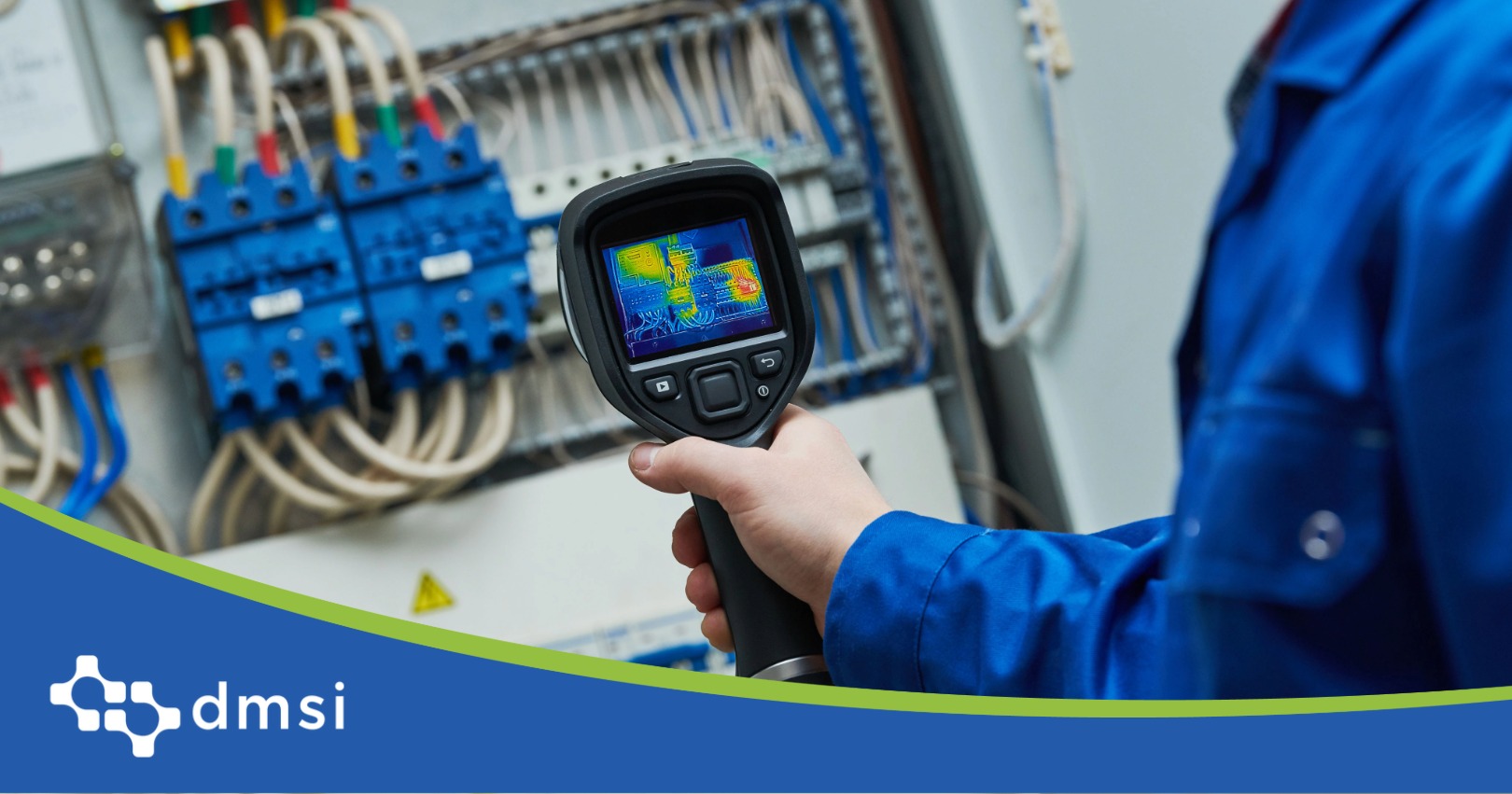
Thermal imaging improves maintenance planning by catching heat-related problems, like a loose electrical connection or a bearing running dry, weeks before they cause a breakdown. That lead time is what turns a scramble into a scheduled repair.
How thermal imaging fits into maintenance planning
A hot spot that would otherwise stay hidden until it caused a failure becomes visible in seconds, without shutting anything down or touching the equipment. That combination, catching problems early without disrupting operations, is why thermal imaging became a standard part of predictive maintenance planning. Here’s how it fits in:
Fast, non-contact scanning
You can scan a full panel or a row of motors in minutes without shutting anything down or touching the equipment.
Catches what visual inspections miss
Heat-related issues rarely produce a sound, a vibration, or any visible sign until much later- the kind a standard visual inspection walks right past.
Builds Into a Repeatable Process
A single scan is useful in the moment, but the real planning value comes once scans become routine. Readings turn into trend data over time, catching a slow drift before it becomes a failure, and each finding can feed directly into a work order system, so a hot spot becomes planned work instead of a forgotten note.
That process is what MAINTelligence™, paired with InspectMT™, is built around: thermal images are captured as part of scheduled inspection routes, tied automatically to the right asset, and correlated with vibration, oil analysis, and inspection history, so a hot spot never sits disconnected from everything else you already know about that piece of equipment.
Who gets the most value from thermal imaging
Plants still building out a program like Asset Inspection and Basic Care usually see a faster return by starting there, then layering in thermal imaging as their maintenance planning matures.
For plants that already have that inspection structure in place, the teams that get the most value are electricians and reliability engineers working with electrical systems, motors, bearings, and connections, anywhere heat is an early indicator of wear.
If your plant runs a lot of electrical infrastructure or rotating equipment and already has a routine inspection process, thermal imaging is one of the highest-leverage additions you can make.
Getting started with thermal imaging for maintenance planning
Adding thermal imaging to your maintenance planning doesn’t start with the camera. It starts with building a routine around it, one that turns captured images into scheduled work instead of files sitting unused.
DMSI’s Infrared Thermography module builds that routine directly into MAINTelligence™, from route-based capture through correlated reporting. Download our Infrared Thermography brochure for the full feature breakdown, or book a reliability strategy call with our team, and we’ll map out what adding thermal imaging could look like for your plant.
Download DMSI’s Infrared Thermography Brochure
"*" indicates required fields
Frequently Asked Questions about Thermal Imaging in Maintenance Planning
What is thermal imaging in maintenance?
Thermal imaging, also called infrared thermography, uses a camera that reads surface temperature instead of visible light, making heat-related issues like a loose connection or an overheating motor visible before they cause a failure.
Does every plant need thermal imaging?
Not every plant needs to start here, and that’s worth saying plainly. Thermal imaging pays off most once a plant already has some inspection structure in place, since a camera on its own only tells you what’s happening right now.
How are thermal imaging routes set up in MAINTelligence™?
Infrared inspection routes are configured using the Route Manager, then wirelessly downloaded to InspectMT™ on a mobile device for route-based data collection in the field.
What FLIR cameras work with InspectMT™?
InspectMT™ connects to FLIR Wi-Fi-enabled cameras, including the E-Series, T-Series, and One Pro models, for wireless thermographic image capture directly from the field.
